From rain-dependent to water-abundant!
Since 1982 TCSRD has been dedicated to the holistic development of the Okhamandal block. This region, surrounded by the sea on three sides, faces a unique challenge—extremely low rainfall and high salinity ingression, which severely impacts both agriculture and access to safe water. Even in years of abundant rainfall, water often drains into the sea, leaving the land parched.
TCSRD Intervention
To address this, TCSRD implemented various water conservation measures under a government-supported watershed development project. Once the government project concluded, TCSRD continued the mission independently, renaming it as the Jaldhan Project, focusing on sustainable water storage to support agriculture.
A Farmer’s Request: Nandhabha’s Initiative
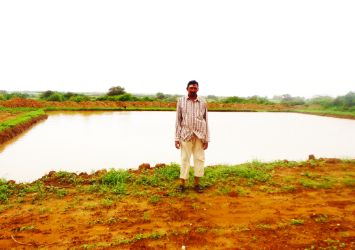
One of the remarkable successes from this initiative is the story of Mr. Nandhabha Rajabha Sumaniya, a farmer from Khatumba village. With his livelihood entirely dependent on farming, Mr. Sumaniya approached TCSRD in FY 2024–25 with a request to construct a farm pond.
Implementing the Farm Pond
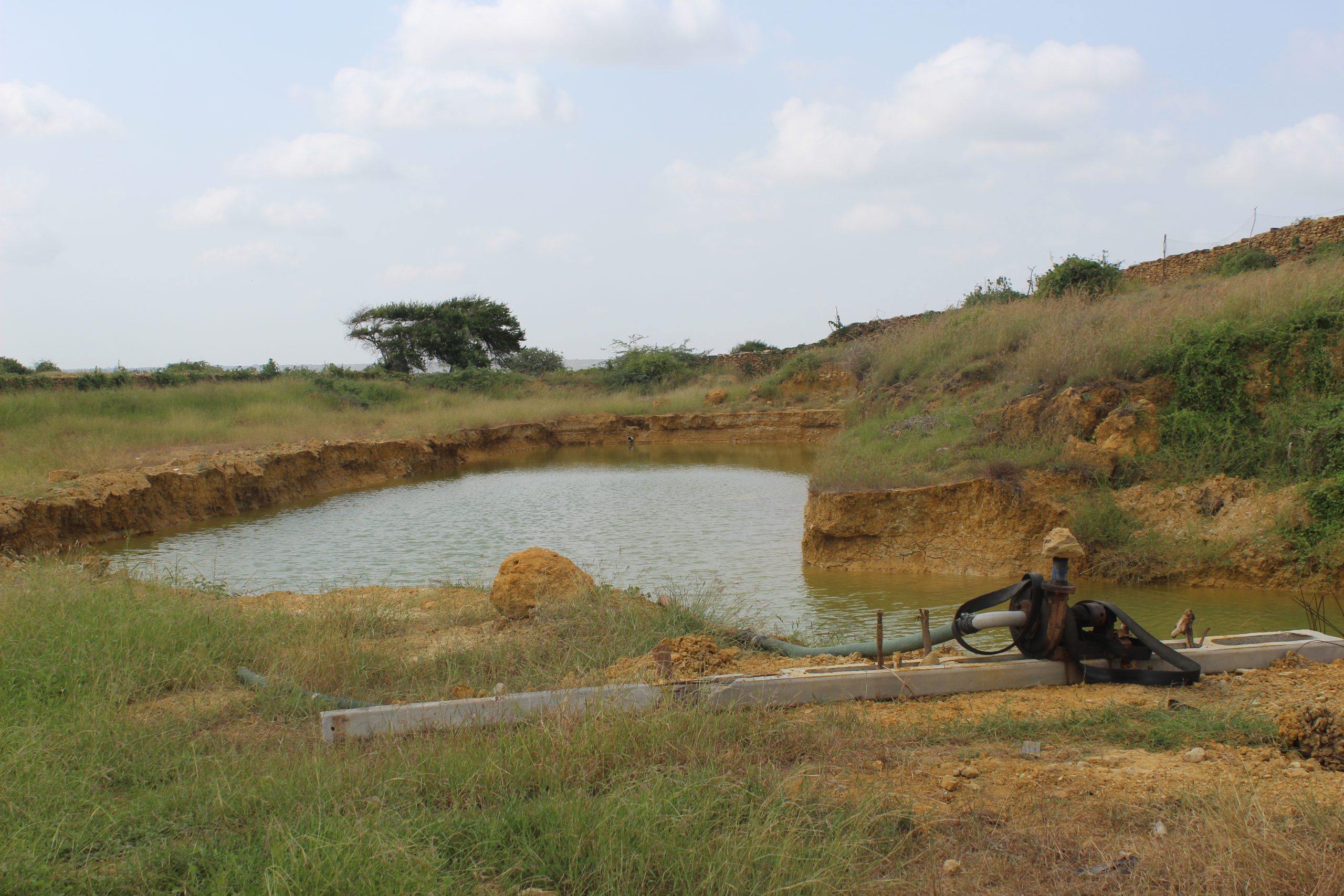
A farm pond measuring 100 feet in length and breadth with a depth of 7 feet was proposed. The farm pond construction done through a participatory approach with TCSRD supporting 50% of the total construction cost. Mr. Sumaniya cleverly used the excavated soil to level the land and the stones to build a boundary wall, effectively enhancing the field’s usability and safeguarding it from stray animals.
Prior to the construction of farm pond, his farming depended solely on the rains, limiting him to grow only one crop i.e. groundnut. Even with this limitation, he harvested around 7000 kg groundnuts annually.
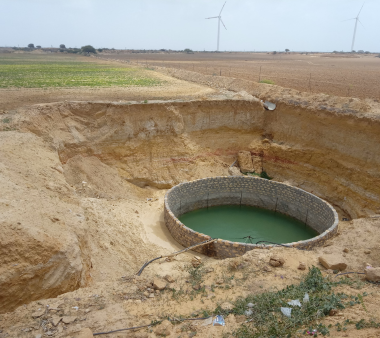
Outcome
Due to construction of the farm pond and hence the availability of water for irrigation post monsoon, Mr. Sumaniya was able to double his groundnut yield to 14,000 kg annually. Despite fluctuations in market prices, his income rose significantly. He also introduced fenugreek as a second crop, further boosting both his farming output and earnings.
Overall, his annual agricultural income increased by nearly 80%, emphasizing the transformative impact of water security and smart and sustainable use of resources.
Motivated by this success, Mr. Sumaniya now plans to install a micro-irrigation system to further improve water use efficiency. His increased income also enabled him to buy a two-wheeler for his granddaughter, making her daily commute to school quicker and easier.
This transformation highlights the deep impact of community-led water interventions. Through the Jaldhan Project, TCSRD is not just building ponds—it is building resilience, improving livelihoods, and securing futures.