
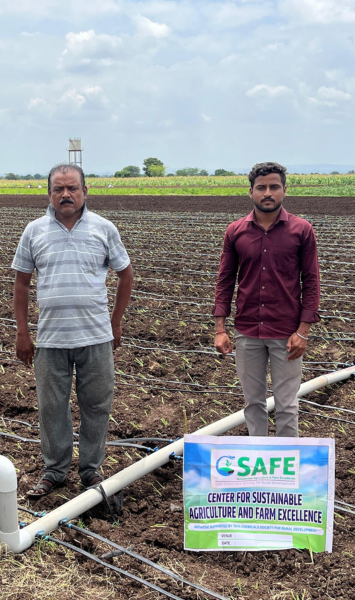
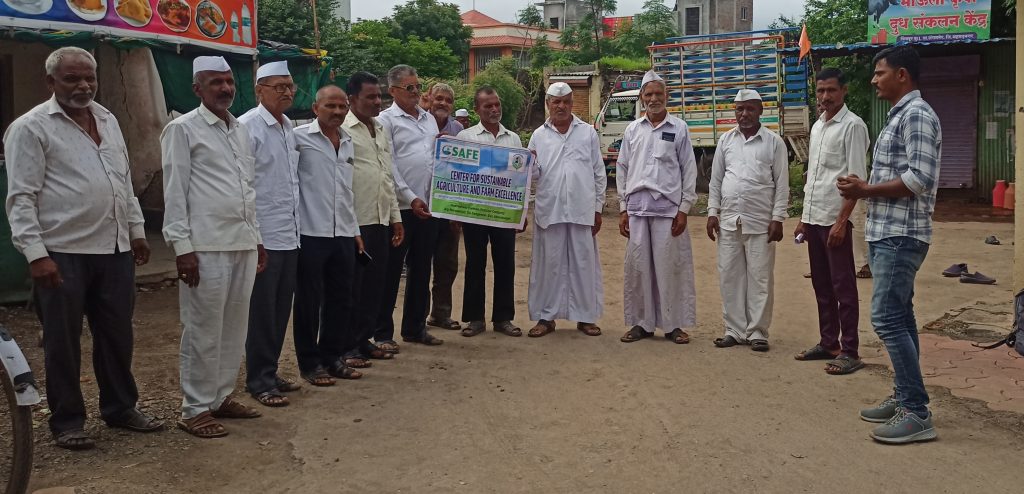
Vegetable Value Chain Development – Sinnar, Maharashtra
.section-impact{background:#e7f4e8;padding:40px 20px;font-family: "myriad-regular", Sans-serif;}.section-impact .container{max-width:1200px;margin:0 auto;display:flex;flex-wrap:wrap;/* stacks nicely on mobiles */gap:40px;align-items:flex-start;}/* ---------- Image ---------- */.section-impact .image-box{flex:1 1 350px;}.section-impact .image-box img{width:100%;height:auto;object-fit:cover;}/* ---------- Text column ---------- */.section-impact .content-box{flex:1 1 500px;}/* Headings */.section-impact h3{ margin:0 0 15px; font-size:1.25rem; color:#333; }/* Lists */.section-impact ul{list-style:none;padding:0;margin:0 0 30px;}.section-impact ul li{ position:relative; padding-left:24px; /* space for arrow */ margin-bottom:10px; line-height:1.5; } .section-impact ul li::before{ content:"\00BB"; /* » arrow */ position:absolute; left:0; top:0; font-weight:bold; font-size:1.1em; color:#666; }/* ---------- Responsive tweak ---------- */@media(max-width:768px){.section-impact .container{flex-direction:column; }}
Challenges faced by farmers:
- Inconsistent market access.
- Price fluctuations.
- Limited knowledge of high‑value vegetable cultivation.
Our Interventions:
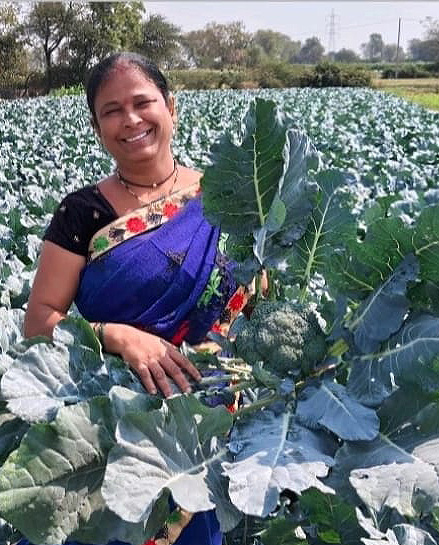
- Development of Exotic Vegetables & Chilli Cluster.
- Comprehensive support for cluster development.
- Conducted capacity‑building sessions.
- Market linkages with major buyers ensuring stable demand & fair price.
As a result:
- 100 farmers in Exotic Vegetable Cluster earning an average of ₹400 per day.
- 70 chili farmers increased their income by ₹27,000 on average.
- 12% average productivity increase in Kharif season across all vegetable farmers.
- Enhanced farmer earnings through direct market access.
Maize & Onion Value Chain – Sangamner, Maharashtra
.section-impact{
background:#e7f4e8;
padding:40px 20px;
font-family: "myriad-regular", Sans-serif;
}
.section-impact .container{max-width:1200px;
margin:0 auto;
display:flex;
flex-wrap:wrap;
/* stacks nicely on mobiles */
gap:40px;
align-items:flex-start;
}
/* ---------- Image ---------- */
.section-impact .image-box{
flex:1 1 350px;
}
.section-impact .image-box img{
width:100%;
height:auto;
object-fit:cover;
}
/* ---------- Text column ---------- */
.section-impact .content-box{
flex:1 1 500px;
}
/* Headings */
.section-impact h3{
margin:0 0 15px;
font-size:1.25rem;
color:#333;
}
/* Lists */
.section-impact ul{
list-style:none;
padding:0;
margin:0 0 30px;
}
.section-impact ul li{
position:relative;
padding-left:24px;
/* space for arrow */
margin-bottom:10px;
line-height:1.5;
}
.section-impact ul li::before{ content:"\00BB";
/* » arrow */
position:absolute;
left:0;
top:0;
font-weight:bold;
font-size:1.1em;
color:#666;
}
/* ---------- Responsive tweak ---------- */
@media(max-width:768px){
.section-impact .container{
flex-direction:column; }
}
Challenges faced by farmers:
- Post-harvest losses.
- High transport costs.
- Limited access to value addition opportunities.
Our Interventions:
- Established Maize Process Facilities.
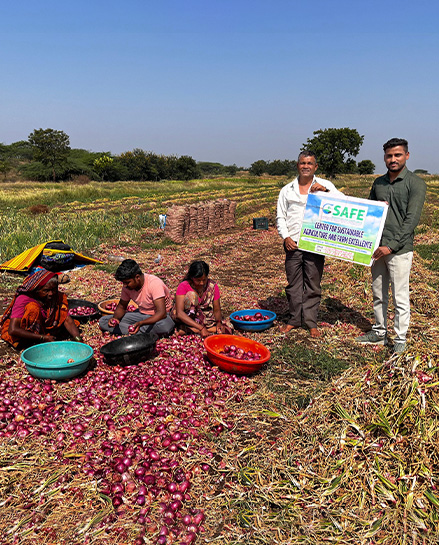
- Linked farmers to onion aggregation and processing units.
- Implemented farm waste management for maize residues.
As a result:
- Improved shelf-life, market price realisation and value addition.
- 400 farmers benefitted from maize processing, generating ₹68 lakh made from 1,200 MT of maize.
- 120 farmers earned ₹2,500 extra per season through farm waste linkages.
Orange Value Chain – Amravati, Maharashtra
.section-impact{
background:#e7f4e8;
padding:40px 20px;
font-family: "myriad-regular", Sans-serif;
}
.section-impact .container{max-width:1200px;
margin:0 auto;
display:flex;
flex-wrap:wrap;
/* stacks nicely on mobiles */
gap:40px;
align-items:flex-start;
}
/* ---------- Image ---------- */
.section-impact .image-box{
flex:1 1 350px;
}
.section-impact .image-box img{
width:100%;
height:auto;
object-fit:cover;
}
/* ---------- Text column ---------- */
.section-impact .content-box{
flex:1 1 500px;
}
/* Headings */
.section-impact h3{
margin:0 0 15px;
font-size:1.25rem;
color:#333;
}
/* Lists */
.section-impact ul{
list-style:none;
padding:0;
margin:0 0 30px;
}
.section-impact ul li{
position:relative;
padding-left:24px;
/* space for arrow */
margin-bottom:10px;
line-height:1.5;
}
.section-impact ul li::before{ content:"\00BB";
/* » arrow */
position:absolute;
left:0;
top:0;
font-weight:bold;
font-size:1.1em;
color:#666;
}
/* ---------- Responsive tweak ---------- */
@media(max-width:768px){
.section-impact .container{
flex-direction:column; }
}
Challenges faced by farmers:
- Inconsistent produce quality.
- Distress sales.
- Lack of infrastructure.
Our Interventions:
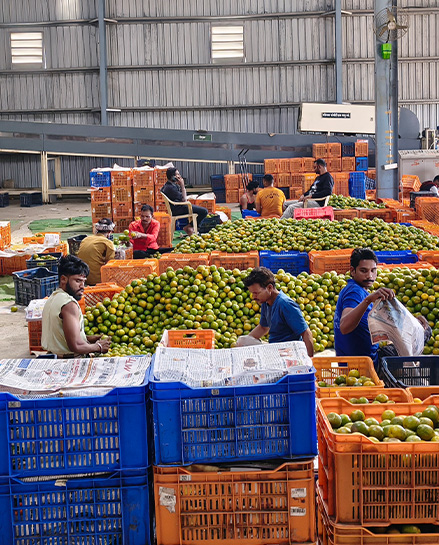
- Farmers were linked with the Shramjivi FPC Orange Value Chain for sorting, grading, waxing, and packaging.
- Help farmers obtain G.I certification and GAP Compliance.
- Improved institutional market linkages.
As a result:
- Earnings increased by 10% through procurement as per quality assessment.
- The FPC expanded its processing capacity from 800 MT to 1,500 MT using a revolving fund, enabling it to serve more farmers.
Pulses & Oilseed Value Chain – Buldhana, Maharashtra
.section-impact{
background:#e7f4e8;
padding:40px 20px;
font-family: "myriad-regular", Sans-serif;
}
.section-impact .container{max-width:1200px;
margin:0 auto;
display:flex;
flex-wrap:wrap;
/* stacks nicely on mobiles */
gap:40px;
align-items:flex-start;
}
/* ---------- Image ---------- */
.section-impact .image-box{
flex:1 1 350px;
}
.section-impact .image-box img{
width:100%;
height:auto;
object-fit:cover;
}
/* ---------- Text column ---------- */
.section-impact .content-box{
flex:1 1 500px;
}
/* Headings */
.section-impact h3{
margin:0 0 15px;
font-size:1.25rem;
color:#333;
}
/* Lists */
.section-impact ul{
list-style:none;
padding:0;
margin:0 0 30px;
}
.section-impact ul li{
position:relative;
padding-left:24px;
/* space for arrow */
margin-bottom:10px;
line-height:1.5;
}
.section-impact ul li::before{ content:"\00BB";
/* » arrow */
position:absolute;
left:0;
top:0;
font-weight:bold;
font-size:1.1em;
color:#666;
}
/* ---------- Responsive tweak ---------- */
@media(max-width:768px){
.section-impact .container{
flex-direction:column; }
}
Challenges faced by farmers:
- Lacked access to post-harvest processing.
- Market price fluctuations.
- Limited exposure to sustainable methods.
Our Interventions:
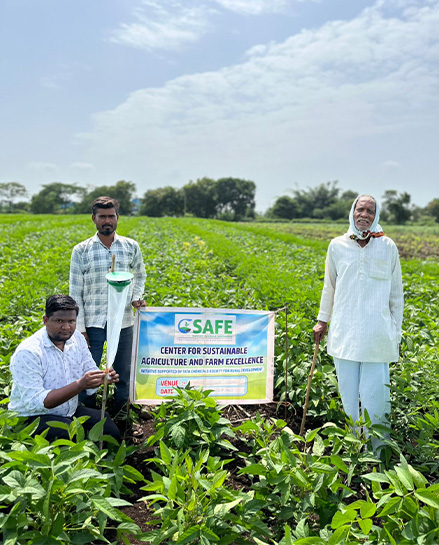
- Facilitated adoption of improved pulses and oilseed varieties.
- Implemented crop diversification programs.
- Linked farmers with FPC for cotton waste management.
- Farmers were registered for MSP procurement through NAFED.
As a result:
- Additional income and improved income stability.
- 100 farmers adopted crop diversification, 16% increase in income.
- 45 farmers earned ₹2,500 extra per season through farm waste linkages.
- Market access and quality-based pricing improved for pulses and oilseeds.
- MSP procurement helped farmers to reduce dependency on local traders.
Millet & Vegetable Value Chain – Chintamani & Holur, Karnataka
.section-impact{
background:#e7f4e8;
padding:40px 20px;
font-family: "myriad-regular", Sans-serif;
}
.section-impact .container{max-width:1200px;
margin:0 auto;
display:flex;
flex-wrap:wrap;
/* stacks nicely on mobiles */
gap:40px;
align-items:flex-start;
}
/* ---------- Image ---------- */
.section-impact .image-box{
flex:1 1 350px;
}
.section-impact .image-box img{
width:100%;
height:auto;
object-fit:cover;
}
/* ---------- Text column ---------- */
.section-impact .content-box{
flex:1 1 500px;
}
/* Headings */
.section-impact h3{
margin:0 0 15px;
font-size:1.25rem;
color:#333;
}
/* Lists */
.section-impact ul{
list-style:none;
padding:0;
margin:0 0 30px;
}
.section-impact ul li{
position:relative;
padding-left:24px;
/* space for arrow */
margin-bottom:10px;
line-height:1.5;
}
.section-impact ul li::before{ content:"\00BB";
/* » arrow */
position:absolute;
left:0;
top:0;
font-weight:bold;
font-size:1.1em;
color:#666;
}
/* ---------- Responsive tweak ---------- */
@media(max-width:768px){
.section-impact .container{
flex-direction:column; }
}
Challenges faced by farmers:
- Low Productivity.
- Poor Market Linkages.
- Lack of Technical Support.
Our Interventions:
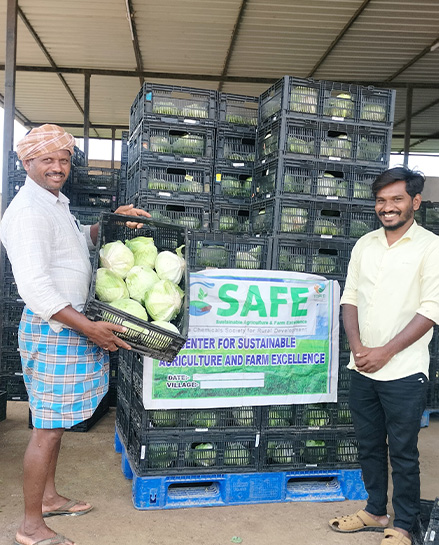
- Launched capacity-building programs, including 11 training sessions and 120 crop demonstrations.
- Developed floriculture clusters to diversify income sources.
- Linked farmers with niche and institutional markets to ensure fair pricing.
As a result:
- 40 floriculture farmers earned an additional ₹40,000 per season.
Additional Interventions
.section-impact{
background:#e7f4e8;
padding:40px 20px;
font-family: "myriad-regular", Sans-serif;
}
.section-impact .container{max-width:1200px;
margin:0 auto;
display:flex;
flex-wrap:wrap;
/* stacks nicely on mobiles */
gap:40px;
align-items:flex-start;
}
/* ---------- Image ---------- */
.section-impact .image-box{
flex:1 1 350px;
}
.section-impact .image-box img{
width:100%;
height:auto;
object-fit:cover;
}
/* ---------- Text column ---------- */
.section-impact .content-box{
flex:1 1 500px;
}
/* Headings */
.section-impact h3{
margin:0 0 15px;
font-size:1.25rem;
color:#333;
}
/* Lists */
.section-impact ul{
list-style:none;
padding:0;
margin:0 0 30px;
}
.section-impact ul li{
position:relative;
padding-left:24px;
/* space for arrow */
margin-bottom:10px;
line-height:1.5;
}
.section-impact ul li::before{ content:"\00BB";
/* » arrow */
position:absolute;
left:0;
top:0;
font-weight:bold;
font-size:1.1em;
color:#666;
}
/* ---------- Responsive tweak ---------- */
@media(max-width:768px){
.section-impact .container{
flex-direction:column; }
}
Backyard Farming:
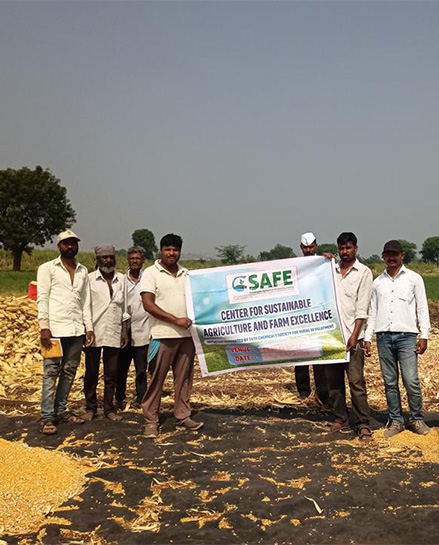
- 400 farmers engaged in backyard farming initiatives.
- Saving grocery costs.
- An additional ₹7,500 was earned over three months.
Government Scheme Conversions:
- Facilitated farmer registrations in schemes.
- ₹2.2 crore in benefits were realised.
Value Addition & Market Access:
- This led to improved income stability.
- Farmers across Sangamner, Sinnar, and Amravati collectively unlocked ₹92 lakhs from a total produce value of ₹535 lakh.